
Do I Need a Passport for an Alaska Cruise?
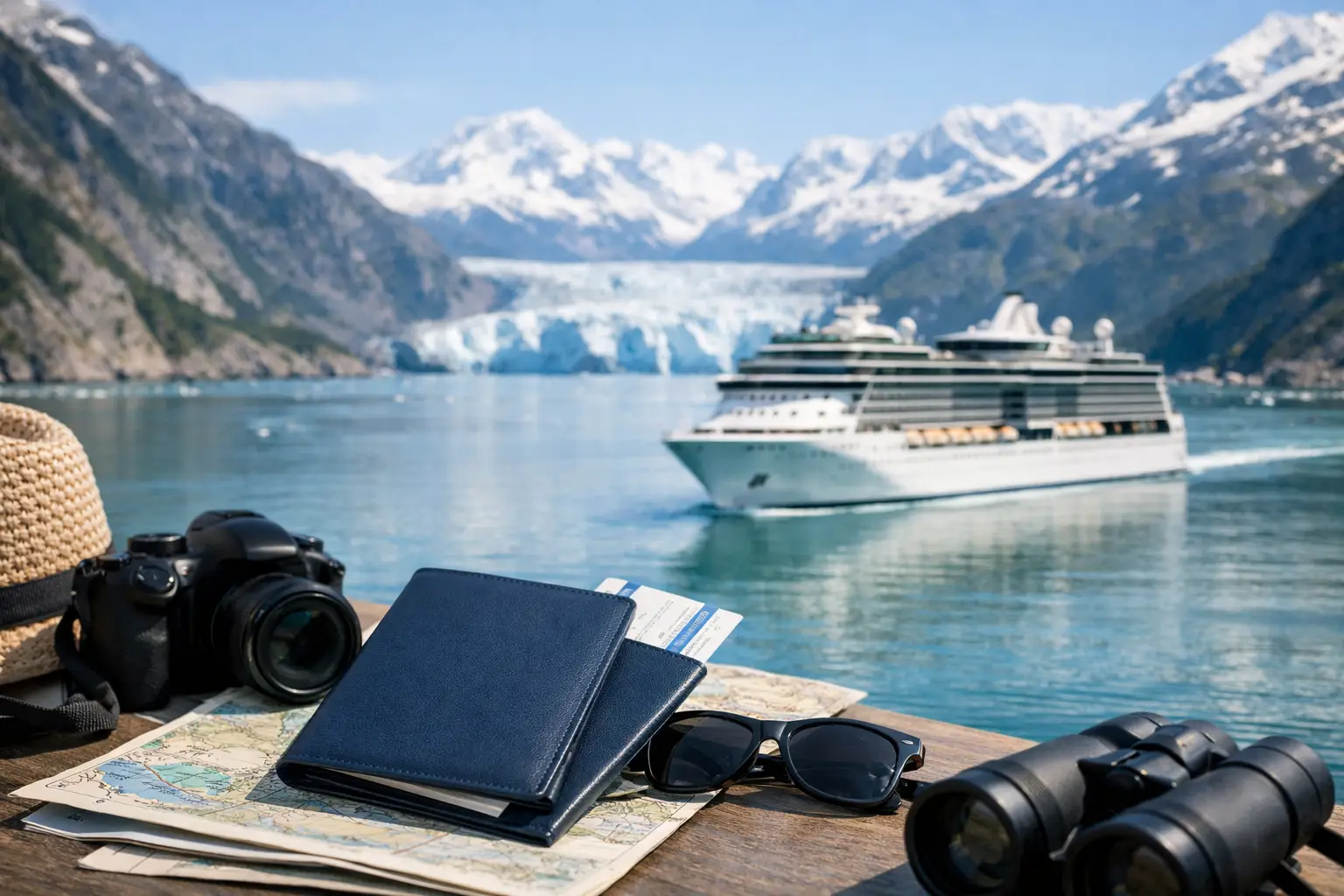
The question we hear all the time is simple: do I need passport for Alaska cruise travel? The honest answer is not always – but in many cases, bringing one is still the smartest move.
That can feel confusing, especially when Alaska is a U.S. state. The complication is that many Alaska cruise itineraries stop in Canada, and the rules can change depending on where your cruise starts, where it ends, and what type of identification you carry. If you want to avoid surprises at embarkation or during your trip, it helps to understand the difference between what is technically allowed and what is truly best for your vacation.
Do I need passport for Alaska cruise itineraries?
If your Alaska cruise is a closed-loop cruise, you may not need a passport. A closed-loop cruise begins and ends in the same U.S. port, such as Seattle to Alaska and back to Seattle. On many of these sailings, U.S. citizens can travel with a government-issued photo ID and an original or certified copy of a birth certificate instead of a passport.
That said, not every Alaska cruise is closed-loop. Some cruises are one-way, such as Vancouver to Whittier or Seattle to Vancouver. Others begin in Canada or end in Alaska without returning to the original U.S. port. In those cases, a passport is generally required for U.S. citizens.
This is where travelers get tripped up. They assume Alaska means domestic travel, but the itinerary matters more than the destination name. A cruise can visit Alaska and still fall under rules that make a passport necessary.
When a passport is required
A passport is usually required if your cruise starts in one country and ends in another. That includes many popular Alaska one-way itineraries, especially those paired with a land tour into the interior of Alaska.
You should also plan on having a passport if your cruise departs from Vancouver. Even if the rest of your vacation is focused on Alaska, you still need to enter Canada to board the ship. The same applies if your cruise ends in Vancouver.
Air travel changes the picture too. If something interrupts your cruise and you need to fly home from Canada or Alaska unexpectedly, a passport can become much more than a nice extra. It can be the difference between solving a problem quickly and dealing with delays, added stress, and emergency paperwork.
For travelers who are combining a cruise with a rail trip, a cruisetour, or extra hotel stays on both sides of the border, a passport is often the simplest and safest choice.
When you may cruise without a passport
For many round-trip Alaska cruises from Seattle, U.S. citizens can sail without a passport if they bring the right alternative documents. In most cases, that means an original or certified birth certificate plus a valid government-issued photo ID, such as a driver’s license.
This option is legal on many closed-loop itineraries, but legal and ideal are not always the same thing. Cruise lines can be strict about document details. Photocopies usually do not qualify. Hospital birth records often do not qualify. Names must match, or you may need supporting documents such as a marriage certificate.
This is why we usually tell travelers to think beyond the minimum requirement. If everything goes perfectly, a birth certificate and photo ID may be enough on the right sailing. But vacations do not always go perfectly.
Why a passport is still the better choice
A passport gives you flexibility. That matters more on an Alaska cruise than many first-time travelers expect.
Most Alaska itineraries include a stop in Canada, often Victoria or Vancouver. Even if you do not plan to leave the ship, having a passport makes border-related issues much easier if plans change. If a medical situation comes up, if you miss the ship, or if weather disrupts your schedule, your options are much broader with a passport in hand.
There is also the comfort factor. For many travelers, especially couples and families planning a big Alaska vacation, peace of mind matters. A passport is one document, widely accepted, easy for cruise staff to verify, and less likely to create last-minute questions at check-in.
It is also useful beyond this one trip. If your passport is current, you are ready for future cruises, international flights, and pre- or post-cruise travel without revisiting the same document question every time.
Special situations that deserve extra attention
Children on Alaska cruises
Children may be allowed to sail on certain closed-loop cruises with a birth certificate, but parents should not assume every rule is identical across all sailings. Age, itinerary, and cruise line policies can affect what is accepted. If one parent is traveling alone with a child, additional paperwork may also be recommended or required.
Real ID is not the same as a passport
A Real ID-compliant driver’s license is helpful for domestic air travel, but it is not a substitute for a passport on international cruise or border requirements. Travelers sometimes confuse the two because both are government IDs. For Alaska cruise planning, they serve different purposes.
Name differences can cause problems
If the name on your cruise reservation does not match your ID or birth certificate, fix it before departure. Even a small mismatch can create check-in issues. Married travelers who changed names are often the ones caught off guard here.
Non-U.S. citizens need different documentation
Travelers who are not U.S. citizens may have different passport and visa requirements depending on their nationality and itinerary. This is one area where general advice online can be misleading, because what works for a U.S. citizen on a Seattle round-trip cruise may not apply to someone else in the same cabin.
What documents should you bring?
If you are a U.S. citizen on a closed-loop Alaska cruise and choosing to travel without a passport, bring an original or certified birth certificate and a valid government-issued photo ID. If your name has changed, bring the legal document showing that change.
If you have a valid passport, bring the passport instead. In practical terms, that is the cleaner option for most travelers.
It is also wise to carry copies of your documents separately from the originals and keep photos of them in a secure place on your phone. Copies do not replace originals for boarding, but they can help if something gets lost.
The question behind the question
When people ask, do I need passport for Alaska cruise travel, they are often really asking something a little different: what is the least risky way to handle my trip?
That is the better question.
If you are sailing round-trip from Seattle and want to know whether a passport is strictly required, the answer may be no. If you are asking what we would recommend for a smooth, low-stress Alaska vacation, the answer is usually yes – travel with a passport if you can.
Alaska cruises are often once-in-a-lifetime trips. Many travelers add glacier viewing, a cruisetour, extra hotel nights, or time in Canada. The more moving parts your vacation has, the more valuable simple documentation becomes.
A few smart planning tips before you sail
Check your exact itinerary, not just the cruise region. “Alaska cruise” is too broad to tell you what documents you need.
Review your cruise line’s current identification rules well before final payment and again before departure. Policies and government requirements can shift.
If your passport is expired or close to expiring, renew it early. Waiting too long creates unnecessary pressure, especially during busy travel seasons.
And if you are planning a one-way cruise, a cruisetour, or any itinerary involving Vancouver, assume a passport will be part of the plan unless you confirm otherwise directly.
For many travelers, this is where experienced guidance makes a real difference. Alaska sailings can look similar on the surface, but the details matter – ports, border crossings, hotel stays, flights, and how all of it fits together.
A good Alaska vacation should feel exciting, not uncertain. If you are trying to choose between what is allowed and what is wise, lean toward the option that gives you more freedom, fewer complications, and more confidence once you are on your way. That usually means packing your passport and focusing on the glaciers instead of the paperwork.
