
Roundtrip Versus One Way Alaska Cruise
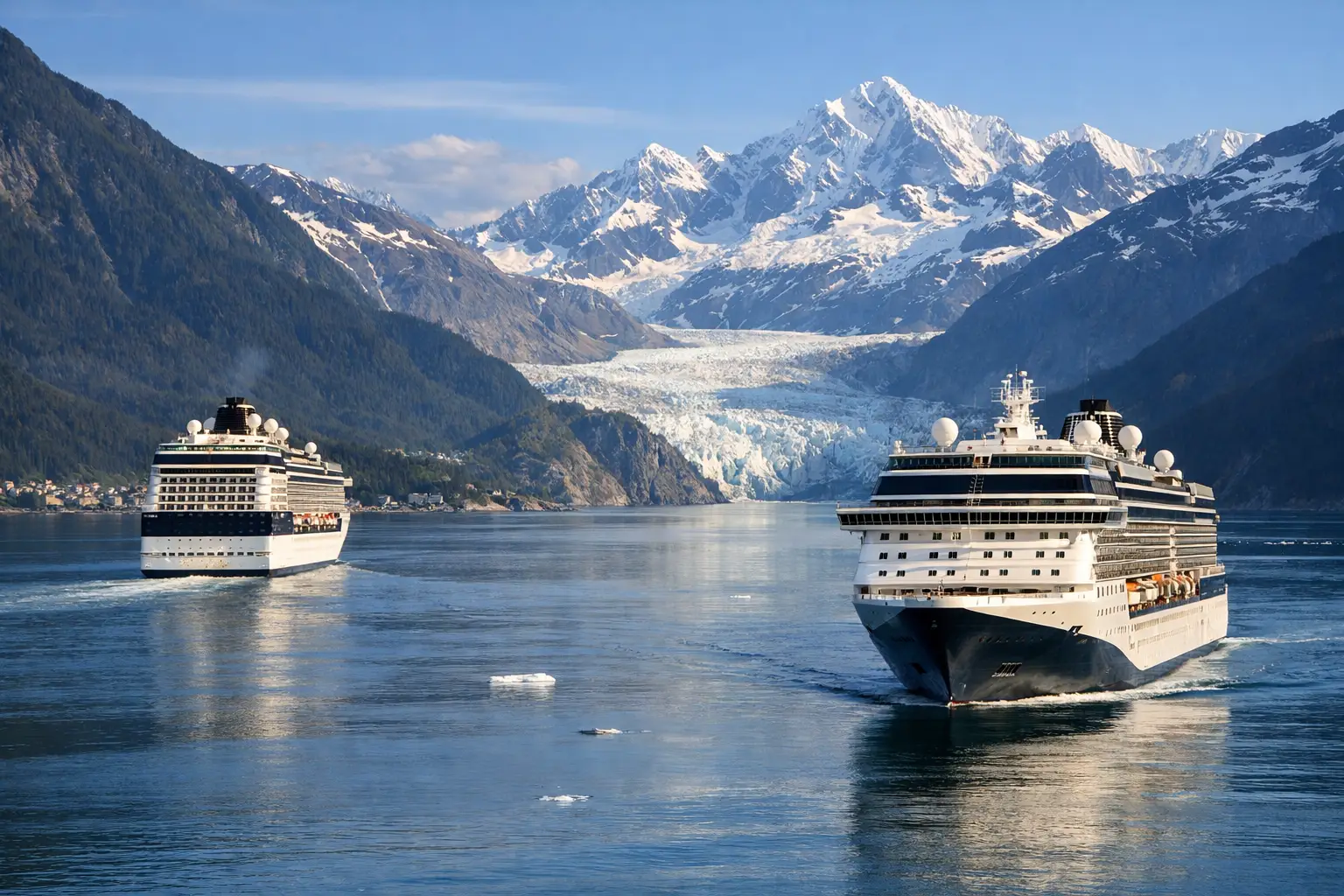
You can have a wonderful Alaska vacation on either itinerary, but the choice between a roundtrip versus one way Alaska cruise shapes almost everything else – your flights, your hotel plans, how much scenery you see, and even the pace of the trip. This is one of the first decisions we help travelers make because it affects the entire vacation, not just the cruise itself.
For some guests, the best answer is simple: keep travel easy, sail roundtrip from Seattle or Vancouver, and let the cruise handle the heavy lifting. For others, a one-way sailing is worth the extra planning because it opens the door to more of Alaska and often pairs beautifully with a land tour. Neither option is automatically better. The right fit depends on how you like to travel.
Roundtrip versus one way Alaska cruise: what is the difference?
A roundtrip Alaska cruise begins and ends in the same port, most often Seattle or Vancouver. You board once, enjoy your voyage, and return to the same city at the end. That usually makes airfare and logistics more straightforward.
A one-way Alaska cruise starts in one city and ends in another, usually sailing between Vancouver and Whittier, Seward, or sometimes Anchorage through the nearby transfer points. These itineraries are often called northbound or southbound cruises. Because they do not loop back, they typically cover more coastline and can include different ports and glacier areas than a roundtrip sailing.
That sounds like a small distinction, but it changes the whole rhythm of the trip. A roundtrip cruise feels tidy and contained. A one-way cruise feels more like a broader Alaska journey.
Why many travelers choose a roundtrip cruise
If convenience is high on your list, roundtrip is hard to beat. Flying in and out of the same city is easier to manage, and many travelers like knowing they will not need to coordinate separate arrival and departure plans. If you are adding a pre-cruise hotel stay, that planning is usually simpler too.
Roundtrip sailings from Seattle are especially popular with travelers who want easy air access from many US cities. They can also be a strong fit for families or groups with different travel experience levels, because the itinerary is more straightforward from start to finish.
There is also something appealing about settling in and letting the cruise do the work. You unpack once, enjoy Alaska’s coastal scenery, visit classic Inside Passage ports, and come back to where you started. For many couples and retirees, that simplicity is part of the vacation.
That said, roundtrip does come with trade-offs. Because the ship must return to its starting point within a set number of days, the route can be less expansive than a one-way itinerary. Some sailings spend more time at sea getting to and from Alaska, especially from Seattle. That is not necessarily a negative if you enjoy sea days and shipboard time, but it matters if your main goal is to maximize time in Alaska itself.
Why a one-way Alaska cruise appeals to experienced planners
A one-way itinerary often gives you a stronger sense of Alaska’s scale. Instead of retracing part of the route, the ship keeps moving, which can allow for different ports, more Gulf of Alaska scenery, and sometimes glacier experiences that feel a bit more immersive.
For travelers who have dreamed of combining a cruise with Denali or Alaska’s interior, a one-way sailing is often the natural choice. You can cruise southbound after a land stay, or sail northbound and continue on to a rail and lodge tour. This is where Alaska starts to feel less like a cruise and more like a full vacation package.
Many guests who choose one-way cruises are willing to take on a little more complexity in exchange for a broader experience. You will likely need open-jaw airfare, meaning you fly into one city and home from another. You may also need transfers between the ship and Anchorage, Seward, or Whittier depending on your itinerary. Those details are manageable, but they need to be planned carefully.
For the right traveler, that extra planning is absolutely worth it. If Alaska is a once-in-a-lifetime trip, many people want to see as much of it as possible.
Cost is not always what people expect
Many travelers assume roundtrip is always cheaper. Sometimes it is, especially once airfare is factored in. But that is not a universal rule.
Roundtrip cruises can offer excellent value, particularly on competitive Seattle departures. At the same time, one-way sailings may deliver more destination value if they include ports, glacier viewing, or land-tour options that matter to you. A lower cruise fare does not always mean the better vacation, and a higher fare does not always mean overspending.
Airfare is usually the swing factor. Flying roundtrip to the same city is often easier to price and easier to redeem with points. Open-jaw flights for one-way cruises can be more expensive depending on your home airport and travel dates. Hotel nights also affect the bottom line. If your itinerary requires an overnight before or after the cruise, that should be part of the comparison.
This is where personalized planning really matters. Looking at the cruise fare alone rarely tells the full story.
Which itinerary gives you the best Alaska scenery?
If your focus is the Inside Passage itself, both styles can be rewarding. You will still see beautiful coastal mountains, forested islands, and classic ports on many roundtrip sailings. For first-time visitors, that may be exactly the experience they want.
If your focus is seeing more of Alaska beyond the Inside Passage, one-way often has the edge. Gulf of Alaska itineraries can feel more varied because they connect southeastern Alaska with southcentral Alaska rather than circling back. For many travelers, that creates a stronger sense of traveling through Alaska rather than simply visiting it.
Glacier viewing depends on the specific sailing, not just whether it is roundtrip or one-way. Some roundtrip itineraries include excellent glacier days, and some one-way routes do as well. The key is to compare the actual glacier destination and port lineup instead of assuming all Alaska cruises are similar.
Who should book roundtrip, and who should book one-way?
A roundtrip cruise is often the best fit for travelers who want fewer moving parts, easier flights, and a more relaxed planning process. It also works well for guests who enjoy ship time and want a classic Alaska cruise without adding trains, lodges, or multiple hotel stays.
A one-way cruise is often ideal for travelers who want to see more geography, add a land program, or make Alaska the centerpiece of a larger vacation. It can be especially appealing to active travelers, repeat cruisers, and guests who have the time to stretch the trip beyond one week.
Age is less important than travel style. Plenty of older travelers prefer one-way because they want the fullest Alaska experience. Plenty of younger families prefer roundtrip because it is simply easier. The question is not what type of traveler you are on paper. It is how much complexity you want in exchange for a broader itinerary.
Practical planning tips before you choose
Start with your total vacation time, not just the cruise length. A seven-day sailing can become a much longer trip once flights, hotel nights, and transfers are added. If your schedule is tight, roundtrip may protect your time better.
Next, think about whether Alaska is the destination or the cruise is the destination. If you mainly want a scenic, comfortable cruise vacation with Alaska highlights, roundtrip may be perfect. If you want to experience Alaska more deeply, one-way deserves a serious look.
It also helps to decide how much coordination you want to handle. A one-way itinerary paired with a land tour can be exceptional, but only when the pieces line up correctly. Cruise line schedules, rail timing, transfer distance, and hotel placement all matter.
That is one reason travelers often appreciate working with specialists like Tom and Debbie Adair at The Alaska Cruise Guide. Alaska itineraries look similar at first glance, but the small differences in ship, route, and logistics can make a big difference in how smooth the trip feels.
The better question to ask
Instead of asking whether roundtrip or one-way is better, ask which one matches the vacation you actually want. Do you want simplicity, easy flights, and a classic Inside Passage experience? Roundtrip may be your best choice. Do you want broader geography, a stronger sense of journey, and the option to add Denali or inland Alaska? One-way may be worth every extra step.
The best Alaska cruise is the one that fits your priorities so well that the trip feels easy once you are on it. When that part is right, the glaciers, wildlife, and long summer daylight get to do what they do best – remind you why Alaska is unlike anywhere else.
