
Alaska Cruise Wildlife Viewing Tips
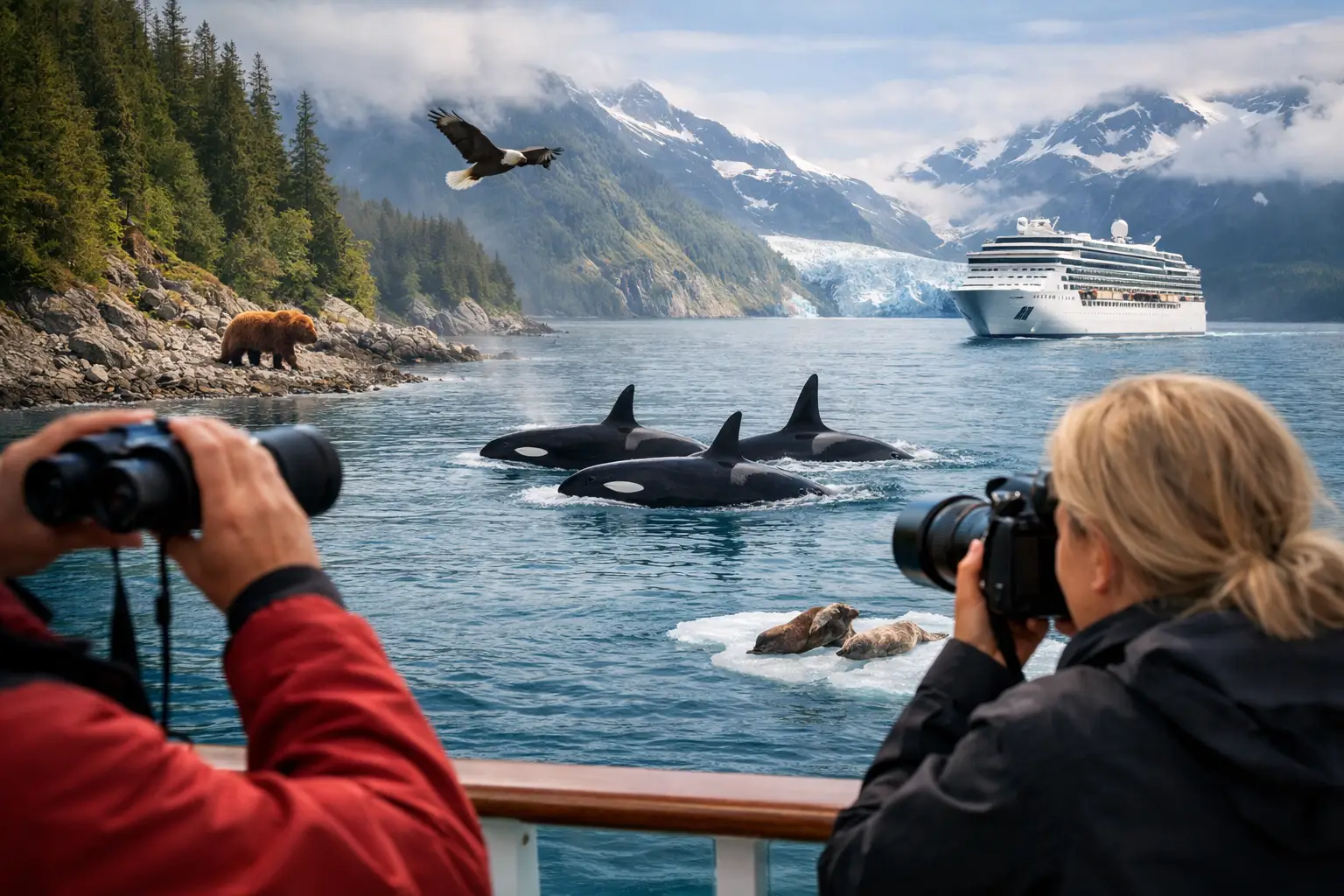
The first whale sighting usually happens fast. One minute you are watching a calm stretch of water from your balcony or the open deck, and the next you hear a few excited voices, turn your head, and catch the misty burst of a humpback blow. That is part of what makes Alaska cruise wildlife viewing so memorable – you are not staring at a distant landscape. You are moving through an active, living environment where the scenery and the wildlife often share the same stage.
For many travelers, wildlife is one of the biggest reasons to choose an Alaska cruise in the first place. The good news is that you do not need to be a serious birder, photographer, or naturalist to have great sightings. But it does help to know what you are likely to see, where the best opportunities tend to happen, and how itinerary choices can shape the experience.
What makes Alaska cruise wildlife viewing so good
Alaska works especially well for wildlife viewing because much of the cruise route passes through protected coastal waters, island channels, glacier-fed bays, and forested shorelines. In the Inside Passage, the ship itself becomes a viewing platform. You are not limited to one lodge, one road, or one short excursion window.
That said, not every sailing delivers the same kind of wildlife experience. Weather, migration patterns, water conditions, and route all matter. Some travelers imagine constant animal sightings from sunrise to sunset, but real wildlife viewing is less predictable than that. You may have stretches of quiet, followed by a truly remarkable hour when whales, sea otters, and bald eagles all seem to appear at once.
That unpredictability is part of the appeal, but it also means planning matters.
Where wildlife sightings happen most often on an Alaska cruise
If your goal is to maximize wildlife opportunities, Inside Passage itineraries are usually a strong fit. The calmer protected waters can make it easier to spend time outside on deck, and the route often brings you close to islands, shorelines, and channels where animals are active.
You may spot humpback whales around Juneau, Icy Strait Point, and the waters near Glacier Bay. Orcas can appear in several parts of Southeast Alaska, though sightings are less guaranteed than humpbacks. Sea lions are common around rocky haul-outs, and sea otters are often seen floating in protected waters. Along the shoreline, bald eagles are so common in some ports that first-time visitors are surprised by how often they appear.
Bear sightings are different. You are less likely to see bears clearly from the ship than you are on a shore excursion. In places like Ketchikan, Sitka, Juneau, and Icy Strait Point, certain excursions improve your odds considerably. The same is true for moose. While some travelers do spot moose from the ship or near port, they are generally not the animal most people see in abundance from the cruise itself.
Best time of year for Alaska cruise wildlife viewing
The Alaska cruise season runs roughly from late spring into early fall, and each part of the season has strengths.
Early season cruises, especially in May, often bring crisp visibility, snowy mountain backdrops, and fewer crowds in port. Wildlife can still be excellent, and some travelers love the cleaner feel of the landscape at that time of year. The trade-off is that temperatures are cooler, and not every viewing day invites long stretches on the outer decks.
June and July are popular for a reason. Days are long, the weather is often milder, and marine wildlife activity can be excellent. If you want extended daylight for scenic cruising and plenty of time outside, this is often the sweet spot.
August and September can still be very rewarding, especially for whales. Later season sailings may also appeal to travelers who like fewer school vacation crowds. The trade-off is a greater chance of rain and lower cloud cover, which can affect visibility. Wildlife does not disappear in wetter weather, but your comfort level while viewing may change.
How to see more wildlife from the ship
One of the simplest mistakes travelers make is assuming wildlife viewing will come to them while they stay mostly inside. It does happen, especially if you have a balcony, but the travelers who tend to see the most are the ones who spend time in the right places at the right moments.
Open decks usually offer the widest field of view. A naturalist talk or daily program may clue you in to areas where sightings are more common that day. Early morning and evening can be especially rewarding, although whales and eagles certainly do not keep a strict schedule.
Binoculars help more than most first-time cruisers expect. You do not need expensive gear, but a compact pair makes distant blows, shoreline movement, and perched eagles much easier to identify. If photography matters to you, bring patience as much as equipment. Many of the best sightings happen quickly, and sometimes the better choice is to watch first and take pictures second.
It also helps to dress for the conditions rather than for the photos. Travelers who are warm enough to stay outside longer naturally increase their chances. A waterproof layer, warm jacket, hat, and gloves can make a real difference, even in summer.
Shore excursions can change the wildlife experience
An Alaska cruise offers plenty of viewing from the ship, but shore excursions often provide the most targeted wildlife opportunities. This is where your planning decisions matter.
Whale watching tours out of Juneau and Icy Strait Point are popular because they place you in smaller vessels with guides who know where marine life has been active. Bear viewing excursions can be exceptional, but these tend to be more limited, more weather-dependent, and often more expensive. If bears are high on your priority list, that should be part of your planning conversation early, not an afterthought once the sailing is already full.
For travelers who want a broader mix of scenery and wildlife, small-boat tours, floatplane trips to remote viewing areas, and certain guided nature excursions can offer better odds than simply walking around town. The right choice depends on your budget, mobility, and how important a specific animal sighting is to your trip.
Choosing the right cabin for wildlife viewing
Cabin choice will not create wildlife, but it can make spontaneous sightings easier to enjoy. A balcony is a real advantage for many Alaska travelers because it gives you private access to the scenery without needing to hurry to a public deck every time the ship slows down or an announcement is made.
Still, it depends on how you travel. Some guests love having a balcony for quiet early-morning viewing. Others are happy to save money with an oceanview or inside cabin because they plan to spend active time on deck anyway. If wildlife viewing is one of your top priorities and you value comfort, a balcony is often worth serious consideration.
Location matters too. Midship cabins can be a good fit for travelers concerned about motion, while some scenic cruisers care more about quick deck access than exact cabin placement. There is no one right answer, which is why matching the cabin to the traveler matters more than chasing a generic rule.
Glacier days and wildlife viewing
Glacier days deserve special mention because many travelers focus so much on the ice that they forget to watch the water and shoreline too. In places like Glacier Bay, Hubbard Glacier, or College Fjord, you may see seals hauled out on ice, mountain goats on distant slopes, or seabirds working the cold waters.
These days are often among the richest scenic experiences of the cruise, and they reward attention. Even when the ship is turning for glacier views, keep scanning beyond the obvious focal point. Some of the most memorable sightings happen while everyone else is looking in one direction.
Alaska cruise wildlife viewing is best when expectations are realistic
The best Alaska wildlife trips are not built on guarantees. They are built on good odds, thoughtful choices, and enough flexibility to enjoy what the day gives you.
If you expect a perfectly scripted parade of whales, bears, otters, eagles, and orcas on demand, you may miss the quieter moments that make Alaska feel so special. If, instead, you choose the right itinerary, travel in a season that fits your priorities, and stay engaged throughout the cruise, your chances improve significantly.
That is where experienced planning can make a difference. A well-matched ship, itinerary, cabin, and excursion mix can turn a good Alaska trip into one that feels personal and unforgettable. At Alaska Cruise Guide, Tom and Debbie Adair help travelers think through those details so the trip fits what they actually want to experience.
Wildlife viewing in Alaska is never fully predictable, and that is exactly why it stays with people. Keep your jacket handy, your binoculars close, and your expectations open – Alaska usually rewards the travelers who are paying attention.
