
Princess Cruise Cabin Selection Guide for Alaska
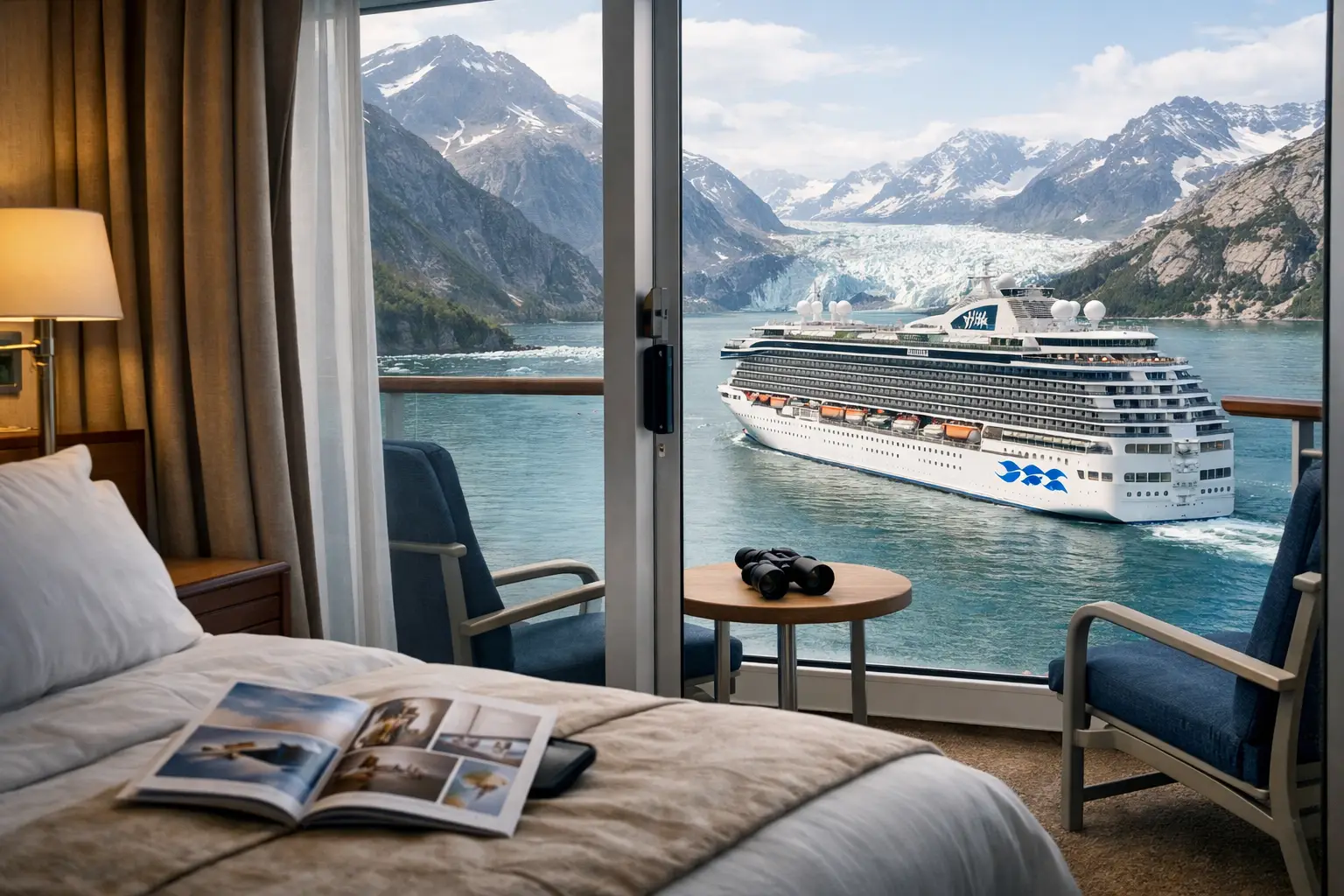
A cabin can shape an Alaska cruise more than many travelers expect. In this Princess cruise cabin selection guide, the goal is not simply to find the lowest fare. It is to choose a stateroom that fits how you want to experience long daylight hours, glacier-viewing days, changing weather, and time at sea.
For some guests, an inside cabin is a smart way to put more of the vacation budget toward excursions. For others, a balcony becomes the place where they watch whales, photograph mountain coastlines, and enjoy quiet mornings with coffee. The right answer depends on your travel style, budget, ship, sailing date, and the specific cabin location.
Start With How You Will Use Your Cabin
Before looking at deck plans, think honestly about your habits on vacation. Are you up early and out for every activity, or do you enjoy a slower morning and a private place to watch the scenery? Are you traveling with children, sharing with friends, or celebrating a special anniversary? Cabin size, configuration, and location matter more when more people are sharing the space.
Alaska itineraries also create a different cabin experience than a warm-weather cruise. You may spend more time indoors than you would in the Caribbean, particularly during cool or rainy periods. At the same time, the scenery outside your ship can be extraordinary. A cabin that gives you easy access to daylight, views, or a quiet retreat can feel especially worthwhile.
Choose the Stateroom Category With Care
Princess offers several principal cabin categories, each with a valid role in an Alaska vacation.
Interior cabins: practical and budget-conscious
An interior cabin has no window or balcony, but it can be an excellent value for travelers who plan to use the ship as their base between port days, meals, shows, and excursions. It is also a sensible choice if choosing an interior cabin allows you to afford a longer sailing, better shore excursions, or a pre-cruise stay.
The trade-off is obvious on an Alaska cruise: you will not have private access to the passing scenery. Some guests also find it harder to tell morning from evening during a sailing with unusually long summer daylight. If you select an interior cabin, consider one that is centrally located and close to the areas you expect to use most.
Oceanview cabins: daylight without the balcony price
Oceanview cabins provide a window or porthole, depending on the ship and cabin category. They offer natural light and a view of the landscape while generally costing less than a balcony. For travelers who want to wake up to Alaska outside their window but do not expect to sit outdoors often, this can be a very balanced choice.
Check the deck plan carefully. Some oceanview cabins have partially obstructed views because of lifeboats or ship equipment. A partial obstruction is not always a problem, especially when the savings are meaningful, but you should know exactly what you are booking rather than assuming every window provides an open panorama.
Balcony cabins: a strong fit for scenery lovers
For many Alaska travelers, a balcony is the preferred cabin category. It gives you personal outdoor space for viewing glaciers, coastal mountains, wildlife, and port arrivals without competing for rail space on public decks. It can be particularly welcome on Glacier Bay or other scenic cruising days, when you may want to step outside repeatedly throughout the day.
Still, a balcony is not automatically the best use of every budget. Weather may be cool, wet, or windy, and some guests discover they spend most of their time in the ship’s lounges and public viewing areas. If a balcony would require sacrificing important excursions or a better itinerary, it is worth weighing the choice carefully.
Mini-suites and suites: space and comfort for longer trips
A mini-suite can be appealing when extra room matters. Couples who prefer a sitting area, travelers sharing a cabin, and guests on longer Alaska cruise tours often appreciate the additional comfort. Full suites may include enhanced amenities and more generous space, depending on the ship and fare.
These categories are best considered as a comfort decision, not just a status upgrade. If you value spreading out after an active day in port, hosting family briefly before dinner, or having more room for layers and luggage, the added square footage can make a genuine difference.
The Princess Cruise Cabin Selection Guide to Location
Once you know your preferred category, the cabin’s position on the ship becomes the next decision. Two cabins in the same category can provide very different experiences.
Midship, forward, or aft?
Midship cabins are usually the best choice for travelers concerned about motion. They sit closer to the ship’s center of gravity and can feel more stable when seas are rough. They also tend to offer convenient access to elevators, dining rooms, and central public spaces.
Forward cabins can be close to the theater, spa, or some viewing areas, but they may feel more motion in unsettled water. Aft cabins can be wonderfully convenient for certain dining venues and may offer attractive wake views. However, they can involve longer walks and, on some ships, occasional vibration or sound from ship operations. Neither location is universally better. The right choice depends on your comfort with walking, sensitivity to motion, and daily routine.
Higher decks versus lower decks
A higher deck may place you closer to pools, buffet dining, and open-air viewing spaces. It can also provide a more elevated perspective. Lower decks are often easier on travelers who are prone to seasickness and may be closer to gangway access on port days.
Do not choose based on deck number alone. Look at what is directly above, below, and beside the cabin. A cabin under a busy pool deck, lounge, fitness center, or late-night venue may have more noise than one surrounded by other staterooms. For a quieter experience, cabins with passenger decks both above and below are often a dependable choice.
Near elevators without being beside them
Being near an elevator can be helpful for guests with mobility concerns, families carrying gear, or anyone who prefers not to walk long corridors. The best location is often nearby rather than directly across from the elevator lobby, where foot traffic and conversation can be more noticeable.
If accessibility is a concern, ask specifically about accessible stateroom availability and features. These cabins are limited, and the right fit should be confirmed early rather than assumed from a standard deck plan.
Think About Alaska Views, but Avoid Overpromising a Side
Travelers often ask whether port or starboard is better in Alaska. The honest answer is that it depends on the itinerary, route, docking arrangements, and sailing direction. The most dramatic scenery can appear on either side, and a ship may turn or reposition during scenic cruising so guests on both sides have opportunities to view it.
A balcony on the preferred side can be nice, but it should not outweigh a better cabin location, a more favorable fare, or an itinerary you prefer. Public decks, lounges, and outdoor viewing areas are designed for scenic cruising, and moving around the ship is often part of the experience.
One exception is a specific personal priority. If you strongly value a particular harbor arrival, glacier-viewing comfort, or a known itinerary feature, it is reasonable to discuss the sailing details before selecting a side. Princess ship configurations and routes vary, so advice should be tailored to the actual voyage rather than based on a general rule.
Check the Fine Print Before You Commit
A cabin number is more useful than a category name alone. Before booking, confirm whether the cabin has an obstructed view, a connecting door, a limited-view balcony, or a location near a potentially noisy space. Connecting cabins are ideal for families and groups, but a couple seeking the quietest possible room may prefer a cabin without one.
Also consider cabin type within the category. Some balconies are covered, some have more exposure to wind, and some have larger or differently shaped outdoor spaces. A few cabins may have unusual layouts, which can be a benefit or a surprise depending on your needs.
Guarantee fares deserve special attention. They can offer savings, but Princess selects the cabin within the category or an eligible higher category. That can work well when price is your main concern and you are flexible about location. If being midship, away from noise, or on a particular deck matters to you, choosing a specific cabin is usually the more reassuring option.
Match Your Cabin Budget to the Whole Vacation
The most satisfying Alaska cruise is rarely the one with the most expensive cabin and no room left for the experiences that matter to you. Consider the complete trip: airfare, hotel nights, transfers, travel protection, specialty dining, and shore excursions such as whale watching, glacier tours, rail journeys, or wildlife experiences.
For one traveler, the best value may be an interior cabin paired with memorable excursions. For another, especially on a milestone trip, a balcony or mini-suite may be central to the vacation itself. There is no wrong choice when it reflects your priorities and is made with clear expectations.
A thoughtful cabin choice gives you a comfortable place to return to after a full day of Alaska’s stunning beauty. If the options feel overwhelming, Tom and Debbie Adair can help compare the ships, deck plans, cabin locations, and fares so your choice feels confident long before you step aboard.
